Serious Arm Amputation During Ice Generator Inspection on Board Stern Trawler Reliance III
Jan 20, 2026
Incident overview
On 17 October 2025, a crew member on the UK‑flagged stern trawler Reliance III suffered a traumatic amputation of the lower right arm after becoming trapped in the vessel’s ice generator while at sea in the North Sea. The incident occurred during routine fishing operations when the crew member left the wheelhouse to investigate abnormal operation of the ice machine and interacted with the equipment while it was still running and not electrically isolated.
The Marine Accident Investigation Branch classified the event as a “less serious marine casualty,” but the injury was severe and life‑altering, involving an arm amputation below the elbow and subsequent emergency evacuation to hospital. The circumstances highlighted deficiencies in machine guarding, isolation practices, and local controls around the ice generator.
Location and facility details
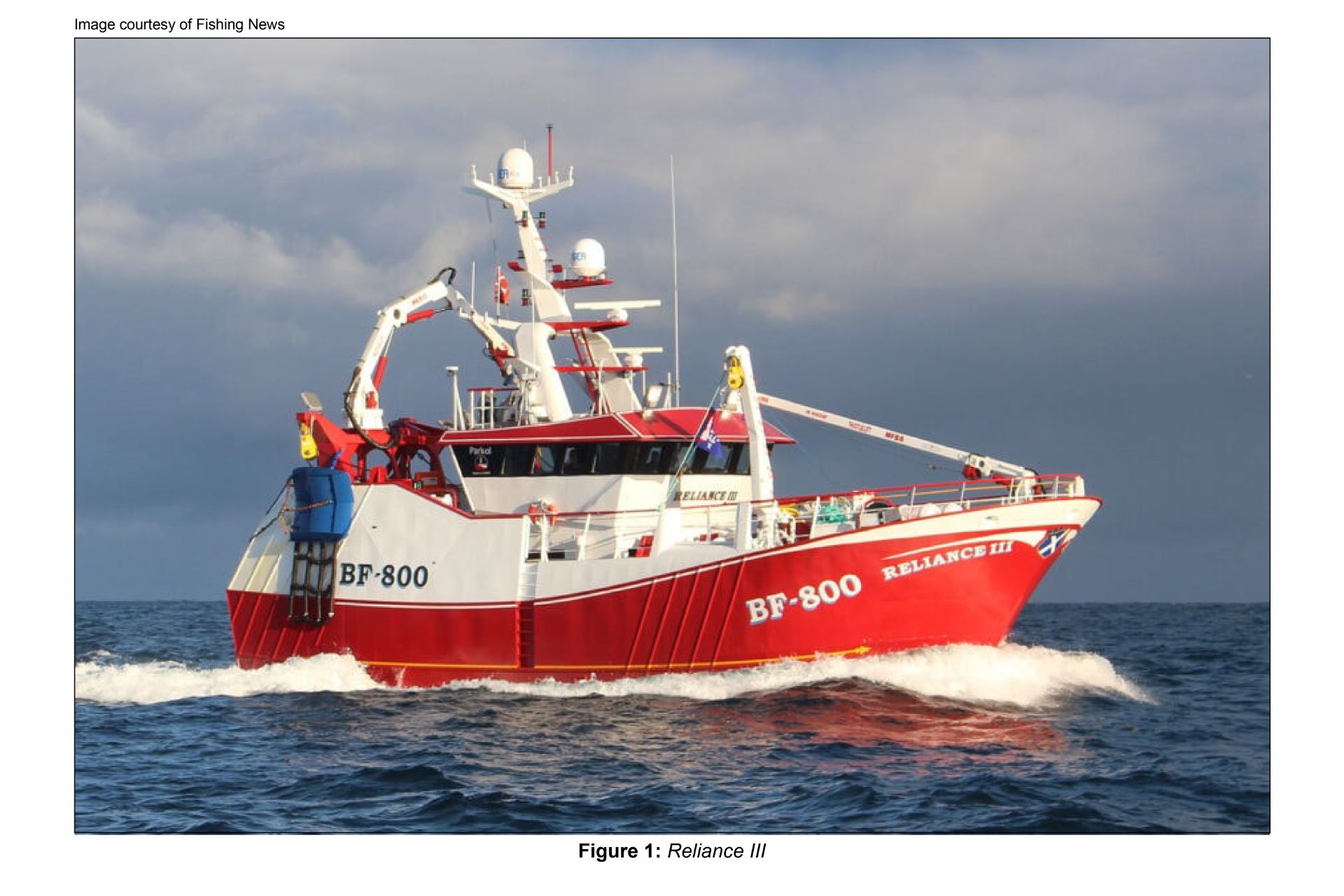
Vessel: Reliance III (BF 800), UK‑registered steel stern trawler built in 2019, 20.4m length overall, gross tonnage 182, operated by Reliance Fishing Company Limited.
Voyage: Fishing voyage from Peterhead to Peterhead, Scotland, with 7 crew on board.
The accident occurred in the ice machine room while the vessel was engaged in fishing operations approximately 46 nautical miles south‑east of Sumburgh, Shetland Islands, Scotland, at position 59°25’.20N 000°00.33E. Environmental conditions were reported as light wind with swell greater than 1m, and the vessel was on passage and trawling at the time.
Incident sequence and response
At about 0500, the on‑watch crew member, alone in the wheelhouse during trawling operations, observed via the fish room CCTV that the ice generator was not functioning normally. The crew member left the wheelhouse unattended and went to the ice machine room to inspect the equipment.
While checking the machine, the crew member removed an inspection hatch cover, which was accidentally dropped into the ice generator’s drum. Without stopping or isolating the machine, the crew member reached into the drum to retrieve the cover and their right arm became trapped in the rotating reamer.
The crew member attempted unsuccessfully to stop the ice generator, and the reamer continued to rotate for about four minutes, ultimately severing the lower part of the right arm before releasing the casualty. The injured crew member then switched off the electrical supply to the ice generator, went to the foredeck, called the skipper by mobile phone, and subsequently activated the general alarm in the wheelhouse.
The skipper proceeded to the wheelhouse and immediately applied first aid, improvising a tourniquet with strips of towel to control bleeding. At 0510, the skipper contacted His Majesty’s Coastguard by mobile phone to request helicopter assistance, and at 0514 a search and rescue helicopter was tasked; a paramedic was winched onto the vessel at 0601.
In an effort to recover the severed limb, the skipper restarted the ice generator to rotate the reamer and free the amputated arm, which was then packed in ice and handed to the attending paramedic. The casualty was airlifted to Aberdeen Royal Infirmary for emergency treatment; however, reattachment of the arm was not possible.
Casualties and evacuation
The incident resulted in a single serious injury: traumatic amputation of the crew member’s right arm below the elbow, with no additional injuries or environmental damage reported. Following first aid on board, the casualty was evacuated by search and rescue helicopter, with onboard medical support provided by a winched‑on paramedic before and during transfer to hospital in Aberdeen, Scotland.
Despite efforts to preserve the severed limb by cooling it in ice, surgeons were unable to reattach the arm, leading to irreversible loss of limb and long‑term impairment for the injured crew member. No other crew members were physically harmed, but the incident carried significant human and operational impact.
Additional context
The MAIB’s preliminary assessment identified several contributory factors:
The wheelhouse was left unattended during trawling operations when the on‑watch crew member went to the ice machine room.
The ice generator remained running and was not electrically isolated before the inspection hatch cover was removed or after it fell into the drum.
There were no interlocks on the inspection covers to automatically stop the machine if a cover was removed while the ice generator was operating.
The crew member undertook inspection and remedial action without informing other crew members, and there was no clear signage requiring isolation before removing inspection hatch covers, only a faded yellow rotating machinery warning triangle on top of the drum. While the skipper’s prompt application of a tourniquet and coordination of the evacuation were commended, the decision to restart the ice generator to free the severed arm introduced further exposure to hazardous moving parts.
Safety implications
This incident underscores critical shortcomings in the control of hazardous energy and the management of rotating machinery on board fishing vessels. Key issues include absence of interlocks on removable covers, inadequate local emergency stopping arrangements at the point of operation, and failure to enforce lock‑out/tag‑out and isolation procedures before placing hands into moving equipment.
It also highlights the need for clear safe systems of work, effective signage, and training that emphasise never reaching into operating machinery, never working alone on hazardous equipment without communication, and maintaining watchkeeping responsibilities during fishing operations. Following the incident, the owner implemented several measures: installing an emergency stop on top of the ice generator, introducing formal lock‑out/tag‑out procedures, adding warning labels to prohibit removal of inspection covers while running, reinforcing crew training, and updating risk assessments and safe systems of work for all rotating equipment.
EntirelySAFE Supports Voices & Safety at Work
In the aftermath of such a heartbreaking incident, workers, families and safety professionals often find themselves wrestling with questions, concerns and the need to speak up. That's where EntirelySAFE can be a meaningful resource.
1. A Platform for Raising Concerns Confidentially
EntirelySAFE provides secure channels for employees to voice safety concerns they might otherwise be afraid to raise.
2. Centralizing Safety Communication
By collecting concerns and observations in one place, EntirelySAFE helps safety leaders identify patterns or recurring risks that might otherwise go unnoticed.
3. Support for Safety Professionals and Families
EntirelySAFE isn't just for workers. Safety professionals can use it to track the effectiveness of interventions.
4. Encouraging a Culture of Accountability and Care
The worst outcome in any workplace is the loss of life. EntirelySAFE's tools push organizations toward proactive safety cultures.
Country:United Kingdom
Date:Jan 20, 2026
Comments
Sign in to join the conversation